

How do you communicate with others? I am thinking about how communication (written, verbal, nonverbal and visual) happens in our culture today. Of course, technology plays a big part in how we network with each other today. There are a multitude of companies and applications like Facebook, Twitter, Instagram, Skype and Facetime help us communicate in our digital age. Have you ever heard someone say, “I don’t know how I would survive without my phone, it connects me to everyone and everything.”
Reading through the book of Ezra I was reminded of the “roots” of communication. We still write letters (5:8-17), we issue decrees (7:21), send memorandums (6:2) enforce stop work orders (4:23) and issue proclamations (1:2). Each of these communication methods serve a purpose today just like they did centuries ago, only today we have a different system to employ them. Consider for a moment how you use technology today to communicate and then continue reading.
God’s Word, the Bible, is one of the ways that He communicates with us. As the grand author, He inspired each and every word that is written for us to read today. The book of Ezra begins with a proclamation given by King Cyrus, a declaration that came from the Lord as He worked in Cyrus’ heart that allowed His people to return to Jerusalem. “The Lord moved the heart of Cyrus king of Persia to make a proclamation throughout his realm and also to put it in writing” (1:1) God inspires (moves our hearts) His people today in much the same way. Through His Word and the work of the Holy Spirit, God leads and guides hundreds of thousands of leaders across the world to bring the truth of His word alive so that people will know Him. We are called to be communicators of His word, called to “Go into all the world and preach the gospel to all creation.” (Mark 16:15). Technology has changed the way we communicate; the message of the Gospel has not changed, the call to go into all the world has not changed. The work of the Holy Spirit continues to inspire and help us work out how we can best steward what God has given us (technology) to spread the message of the good news.



 Do you wear glasses? Did you have to take your glasses off to read this text? It’s possible your spectacles are sitting precariously on the tip of your nose. Maybe your one of the lucky people who don’t need glasses, if that’s the case there is a good chance you under the age of forty. (Just wait, you could be joining the “four-eyed” club sooner than you think.) I am a year or two over the age of forty and never dreamed that the day would come when I would need glasses, yet as I write these words I am wearing my optical aids. Our vision changes, it’s a fact of life.
 Have you ever been driving through the countryside or nearby a local farm and come across the following scene? You must wonder, is the grass really that much better on the other side? This familiar idiom tries to capture the thought that people (or animals) are never satisfied with their own situation; they always think others have it better. When we consider our circumstances, when we compare our experiences with that of others we tend to think that we would be better off or happier on the other side.
 With names like Millennium Force, Top Dog Thriller, Formula Rossa, Intimidator 305 and Steel Dragon 2000, these world-famous roller coasters will provide the thrill that extreme adrenaline junkies seek. There are intense drops, twists and turns, incredible speeds and gut wrenching G-forces that push your mind and body to its limits. You might be one of those people who gets excited about being strapped into the seat on one of these giant steel mechanical marvels or you might be like me, the anxious spectator (who likes to keep two feet on the ground) left holding all the bags, hats and loose change until the ride is over.
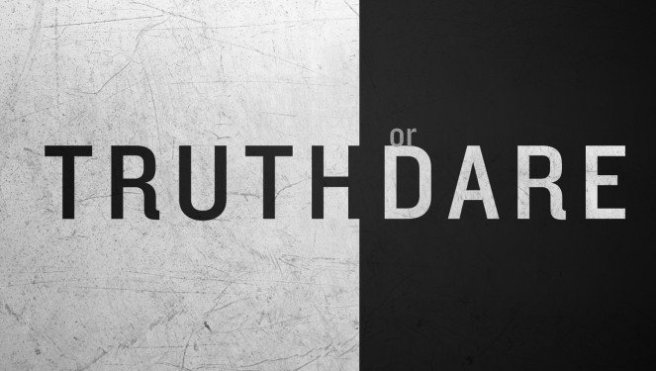 Truth or Dare is the classic party game of embarrassment. A group of people take turns asking each other “truth or dare”? When someone chooses “truth”, they must answer the question truthfully regardless of how embarrassing it is. When someone chooses “dare”, they are given a task to complete. One example might be: Truth, “What is your deepest darkest fear” or dare, “lick the floor”. You must choose one, what would it be?
 steveworkingthroughtheword.com