

A Gold Standard

400-oz-Gold-Bars-AB-01

If you look closely at the image you can see stamped in each bar of gold the number 999.9. This number represents the measure of purity of the gold which can also be read as 99.9%. When I consider its weight, it’s value and the process of refining to get to that high measure of purity I have to ask these questions: “Why not 100%”? “What is it that binds to this natural element that holds is back from perfection?” A quick search online will tell you that the 0.1% is comprised of other metals that give the gold strength and uniformity in shape.

The book of James carries a lot of weight when it comes to practical instructions for holy living. We read about facing trials and temptations, listening and doing, faith and deeds, submitting to God and many other valuable lessons. When we consider the holiness of God and living a life that reflects that holiness we have to have a measure to stand against, James 3:17 helps put that into perspective: “The wisdom that comes from heaven is first of all pure; then peace-loving, considerate, submissive, full of mercy and good fruit, impartial and sincere.” The degree of purity that James refers to is that of 100%, a purity of wisdom that is unmatched on this side of heaven. In the previous verses James use some very strong words to describe any wisdom that does not come from heaven. In the light of this pure and holy wisdom flows the instruction to us today to live as James describes, peace loving, considerate etc.

You can’t add anything to 100%, it is the fullness of itself. As hard as it might be because of who we are and because we live in a fallen world, there will always be a percentage of vulnerable space in how we live and act in this life. Instead of mercy we may offer up revenge or harshness, in place of being considerate we may be disrespectful or impatient. James tells us to “get rid of all moral filth and the evil that is so prevalent and humbly accept the word planted in you, which can save you.” (1:21). The beautiful part about this challenge is we don’t have to do it alone, we have a God who leads and guides us. We, like the gold need more than just our own strength to live a holy life, we need a God who is full of mercy and grace. As His church and His people we need each other, and to me that is worth more than gold.

Gravity and God.

GravityHow much thought have you given to the concept of gravity? To be honest I don’t think about it a whole lot, for the most part I just take it for granted. When I do the things I do, I stay in contact with the ground beneath my feet, as do the objects around me. We can’t see gravity, we can’t turn it off, it is always active. We have all heard the common phrase “what goes up, must come down.” It seems like a simple concept but there is a lot of depth to understanding the how and why of gravity. I will leave the mind-numbing details on the topic to the great scientific minds of the past such as Newton and Galileo.

When we reflect on the extensive description and character of our God and His holiness, we must consider that He is all-powerful, all-knowing, and all-present. All throughout scripture we are reminded of His great power, plan and presence and the book of Esther is no exception. It is interesting to note that throughout the story God’s name is never mentioned. When I read through the story of Esther and her rise to become queen, I can’t help but see the works of an all-powerful God. This story isn’t just about a beautiful woman who catches the eye of a King, it is about God using one of His servants to set in motion a plan to save his people from complete destruction. In an earlier entry I talked about the faith that Esther had and how she was the “superhero” of the story when really all along it was God working through His servants to accomplish His mission and fulfill His promise.

The book of Esther has all the elements to stand alone story, a good plot, action, tragic events, suspense, passion and ultimately leads to a happy ending. When we consider the “gravity” of the story, when we read it through knowing that God had orchestrated each and every moment from the beginning to the end for His purpose, it helps me reflect on how He continues to work today. Some would say that we live in a “Godless society” today, and for many this is true. I know that I live in a world where God is alive and active, and yes, sometimes I take that for granted, just as I do the principles of gravity. Just as God worked through the life story of Esther, He continues to work in all of our lives with a purpose. Sometimes we may not see God working in the day to day of our lives but He has a plan (all-knowing), He walks beside each and every one of us (all-present) and has the power to change and use us for His purpose (all-powerful).

Connections

Tangle of colorful electric wires and cablesNot that long ago I was trying to figure out an electrical problem with my tent trailer. Usually I am pretty handy at fixing things but when it comes to electrical issues and wiring connections, I get lost easily. As I opened the access panel to the electrical system there were blue, green, black, red and yellow wires stretching in every direction. It was a mess and I didn’t stand a chance. Each wire, each connection had a purpose in the function of the working of the trailer, it is through this lens that I read through the book of Deuteronomy.

Deuteronomy is one of those books in the Bible that have an array of connections and references that “cross borders” within the other Old Testament books and continue right into a number of books in the New Testament. The book of Deuteronomy is quoted over 80 times in the new testament and 365 times in the later Old Testament books, that is a lot of connections. The next generation of believers in Israel at that time were perched at the doorstep to the promise land. Through Moses, God calls the people back to the commitment of living within the guidelines of the law. It was a call to listen and obey his commands so that they may live to see the fulfillment of His promise. God’s promises never fail.

The law God set before his people then and the way we are called today reflect His desire to be in relationship with us. Our God pours out His love into our lives and in return wants us to love Him back. Through God’s divine plan, He uses the life and times of the Israelites to connect us with an example of how to live in a relationship with Him. Like the Israelites, our faith comes with highs and lows and that inevitably puts distance in our relationship with Him. I would challenge anyone who reads the first five books of the Bible and can’t see that God desires a relationship with his people. From the very minute God created Adam till this moment in time and beyond, God will continue to pursue a loving personal relationship with all His people, for this I am thankful.

“Apples to Oranges; Apples to Apples”

applestoorangecomparison1000x553“Comparing apples to oranges” or “Comparing apples to apples”. These are two common phrases that we use or hear when we compare things that are either impossible to match or we have two things that can be reasonably compared. A great example would be comparing a Mac computer to a PC, there really is no comparison, the Mac is the superior product. An apple and an orange may both be a fruit like a Mac and a PC are both computers, but you can’t put them in the same basket.

I love the fact that I have been created in the image of God, “So God created mankind in his own image, in the image of God he created them; male and female he created them.” Gen 1:27. Each one of us was created unique and with special purpose, God has shaped us and given us each a set of characteristics that set us apart from others. In the book of Leviticus, we read much about God being Holy, His perfect holiness is one of many characteristics that set Him apart from us today. When I think about the commands he gives us to be Holy like He is, are we comparing apples to apples or apples to oranges? The fact that He is perfect in every way and we live in a fallen and sinful (imperfect) world, I would lean towards apples and oranges. What I do believe is that he sets for us a standard to measure against, that is the life of Christ.

How is this standard attainable? Leviticus 8:23 describes a part of the instructions that Moses had to perform in the ordination of the priests (Aaron and his sons) “Then Moses took some of its blood (the ram) and applied it to the lobe of Aaron’s right ear, the thumb of his right hand and the big toe of his right foot.” You might wonder why this helped me, at first I didn’t see it then as I did a little exploring I understood the significance of this Old Testament tradition. The blood on the ear was a reminder to listen and pay attention to the Word of God, the blood on the thumb represents the duty we have to perform God’s work and the blood on the big toe signifies that we are to follow in God’s ways.

God’s holiness, which is deeply rooted in His character is a part of who we are, it was given to us as He created us in His image. When we read His word, do His work and follow in His ways we live a life that gives Him glory and His holiness will shine through us so that others can see it.

Looking in the Mirror

ManMirror

What do you see when you look in the mirror? The most obvious answer would be that you see your reflection. When we look into a mirror we see an exact image that represents our physical appearance at that particular moment in time. I want to take a moment to gaze into the mirror and reflect (no pun intended) on the image that we can’t see; a part of us that was fearfully and wonderfully made by a creator who, in the beginning, shaped us in His image.

One of the foundational characteristics of who our God is can be found all throughout scripture, among many others it is the attribute of holiness. When we read through the book of Leviticus we are continually reminded of His perfect holiness and how we are to reflect it in our lives as a people set apart from the world.  Leviticus 11:44+45 and 19:2 clearly state to the people of Israel that it was His desire for them to be holy, “be holy, because I am holy”. In the Old testament the particulars of the law were laid out for the people so that they could live in the presence of God and enjoy His blessings. Through Christ and his sacrifice on the cross we no longer have to follow the laws of sacrifice as the Israelites did, but we are still called to be holy. Peter in his first letter to God’s people remind them to remain faithful, conforming not to the evils of the world. They were called to be obedient children, to be holy because He (God) is Holy.

Our being holy does not reflect in our physical appearance as to be seen in a mirror. The reflection of His holiness in our lives is found in our obedience to his word. Holiness is seen in how we live out our daily lives. It is the “putting aside” of the evil desires of the world. It is living to cause the name of Jesus to be exalted, to glorify God and to be His messengers of love everyone. The next time you look into the mirror, think about how you reflect God’s holiness in who you are and what you do.

Tug-of-War

tug-o-warTug-of-War… The classic game of strength, teamwork, grit and for the inexperienced, rope burn. The game pits two teams against each other for dominance and bragging rights and the satisfaction of dragging the other side through the mud. It has been some time since I anchored the end of the rope but the thoughts bring back some fond memories of the many church picnics and tug-of war competitions I joined as a kid.

The Galatian people in some respects were participants in a sort of Tug-of-War when it came to the truth of the gospel. Remembering that Paul was writing to Christians, imagine if you can two ends or sides of the rope stretched over a line. Faith being on one side and works on the other, each pulling for your attention.  When we read through the letter to the Galatians Paul has some strong words for the people, “As we have already said, so now I say again: If anyone is preaching to you a gospel other than what you accepted, let them be under God’s curse.” (Gal 1:9). Paul is saying to the people that there should be no contest, there is only one gospel anything else is “variant message” an “alien message” (1:6 MSG).

Paul continues throughout his letter to remind and teach the people that it is through faith in Christ that we are saved, not through the works of the law. He digs deep into the roots of their past and reminds them of the covenant (promise) given through Abraham, a promise of one who will come to redeem us and give us everlasting life through him. Take Paul’s concern for the Galatian people and fast forward generations and centuries to our day and age now, these same principles apply. There are many things in life today that pull for our attention, things that distract us from living fully in life by the spirit.  Like the people of Galatians, we need continual reminders that Christ is the center of the gospel message. When it comes to winning the game of Tug-of-War I am reminded of Romans 8:1 “If God is for us, who can be against us?” I want God on my team.

“To Be Continued…”

tobecontinuedOne on my pet peeves is seeing these three words “to be continued” as they appear across the screen at the end of one of my favorite television shows. There is usually a good reason for it but it really irritates me. I think it has something to do with leaving me hanging on the edge of my seat, I need, well OK, I want resolve. I want to know what happens next. The unexpected pause in the story has to wait for another time.
There is a momentary pause, a “to be continued” when we reach the end of Luke’s Gospel before we get the continued story in Acts. If we read scripture as it is sequentially laid out in our bibles today, we read through John’s Gospel before Luke continues his account of Jesus’s life and mission. Luke’s introduction in Acts chapter one sets the scene for what will be the continued work of the Holy Spirit through the apostles.  Acts 1:1-2 reads:” I wrote about all that Jesus began to do and to teach until the day he was taken up to heaven, after giving instructions through the Holy Spirit to the apostles he had chosen”. When I read these two short verses my attention is drawn to the word “began”.

I am reminded of the commonly used phrase “to get the ball rolling”. Luke’s Gospel, his account of the life of Christ and his ministry among us is the momentum that moves us to want to continue sharing the same good news that Jesus proclaimed. The “to be continued” in this sense becomes dual purpose; first, Luke continues his story and secondly, we like the apostles are called to move with and maintain the momentum of Christ’s work here on earth. The book of Acts gives us a clear picture of how this work is to be done, not on our own power but through the power of the Holy Spirit. The work that Christ began for us and in us will carry on as described in Philippians 1:6, we need to walk in confidence that He (Christ) will complete His work when he comes again.

Seek & Save

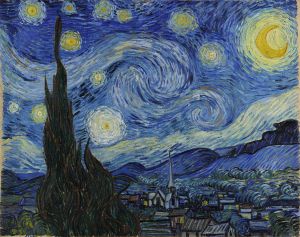
1280px-Van_Gogh_-_Starry_Night_-_Google_Art_ProjectLuke 19:10… “For the Son of Man came to seek and to save the lost.”

Picture yourself for a moment in New York city at the Museum of Modern Art. You are sitting in front of one of the most recognized paintings in the history of western culture, “The Starry Night” by Vincent van Gogh. Something draws you into the skillfully crafted painting. Is it the texture in the colors of oil paint brushed on the canvas or the sensation of wave like motion from the swirling patterns formed in the sky or is it the circles of white and yellow light that surround the moon and stars?

Reading through the book of Luke I was stopped for more than just the momentary pause the punctuation calls for the end of verse 10 in chapter 19. There was something there that captured my attention; my mind was trying to wrap around the implications of the words “seek” and “save”. As I considered these words within the context of this verse my eye was drawn to the cross reference marker that directed me to a couple of helpful verses.

(Seek) “As a shepherd looks after his scattered flock when he is with them, so will I look after my sheep. I will rescue them from all the places where they were scattered on a day of clouds and darkness.” (Ezekiel 34:12)

(Save) “For God did not send his Son into the world to condemn the world, but to save the world through him.” (John 3:17)

The Gospel of Luke is used to communicate the great love that the Lord has for us. Each carefully chosen word, phrase and story leads us to the shepherd who is always seeking us out. The shepherd, The Son of Man, Jesus Christ is our salvation. Knowing that we are actively being pursued still today and looked after by our God is an incredible comfort (at least for me). Through Him, that is Christ, we can be saved. This is the message that Luke so carefully investigated for us as he looked at the events of Jesus’ life and at the lives of those who came before him. It is recorded here so that we could gain confidence in our faith, deepen our relationship with God and learn to share the good news with others.

The Investigator…

magnifying-glassI quite enjoy watching investigative television shows or movies. There are some very well researched and incredibly well written scripts that have captured my imagination. The writers spend hours of time researching the intended subject and pour over the details with a fine tooth comb as they write the final script. The more research and investigating they do the more authentic and real the story becomes.

I was intrigued by the opening verses of the Gospel of Luke, specifically how he tells us that he himself has “carefully investigated everything from the beginning”. I imagine that this would have taken a great amount of time considering the investigative tools he would have had access to. Luke really does his homework; he sets the stage by reminding us of prophecies that have been fulfilled from the accounts of those who came before him, he also includes details of an extensive genealogy of the line of Jesus. Luke knew that there was an important message that needed to be communicated through his research and writing, he didn’t want to miss anything.

I like to know as much as I can before I jump into doing something. Today we have an incredible amount of information available to us through the internet and other online resources. When it comes to sharing the Gospel message we have the incredible resource of the written words in the Bible. Men like Luke have done the homework for us. What we need to do is resist the urge to google “sharing the gospel” and sit down and read the Bible, it’s all there, the whole story in one book. I don’t want to discount the work of the many who have devoted their lives to the study of scripture and the message of the Gospel, I believe that the place we need to start is in scripture experiencing first hand the words for ourselves. God has used these words to change lives.

Immediately: im·me·di·ate·ly /iˈmēdēətlē/.

timeWe all have an expectation when it comes to time. There are many things in life that we have come to expect with a sense of immediacy. For example, if your waiting more than a second or two for your webpage to load or your search results to return you might be prone to wonder if there is something wrong. What about instant messaging? We send a message, we can see that it was delivered (sometime we can even see when it was read) and for whatever reason we expect a message to come back right away, after all it is supposed to be instant.

The one part of the story of Mark that continues to astound me is when Jesus calls his disciples, “Come, follow me,” Jesus said, “and I will send you out out to fish for people.” At once they left their nets and followed him”. The “at once” can also be translated immediately. Simon and Andrew are two fishermen who dropped their nets and followed Jesus, just like that. We see it again when he calls James and John, “without delay” … these guys left their dad in the boat and followed Him. When I consider these accounts of obedience in God’s call on their lives and their immediate response I think about the significance and priority of the message they were called to teach and preach.

Jesus goes from place to place calling people to follow Him, He displays his majesty and power so that people will believe in Him. He has the power to change peoples lives on the spot. The question I ask myself is is this: how am I living out my calling today? Do I do things for the Lord without delay or at once? These are difficult questions and honestly I think I can do better at listening to what the Lord is calling me to do and follow through on it sooner. Sometimes we really wish that our efforts would produce results in an instant, we can all think of that “lost” person who if they only found Jesus right now would be so much better off. God’s timing in all of life can’t be forgotten; we work in different realities of time and through His leading and in His time He will use us to accomplish His will.